
Accounting Map
OverviewAppHow it worksBookBackground

What is the Accounting Map?
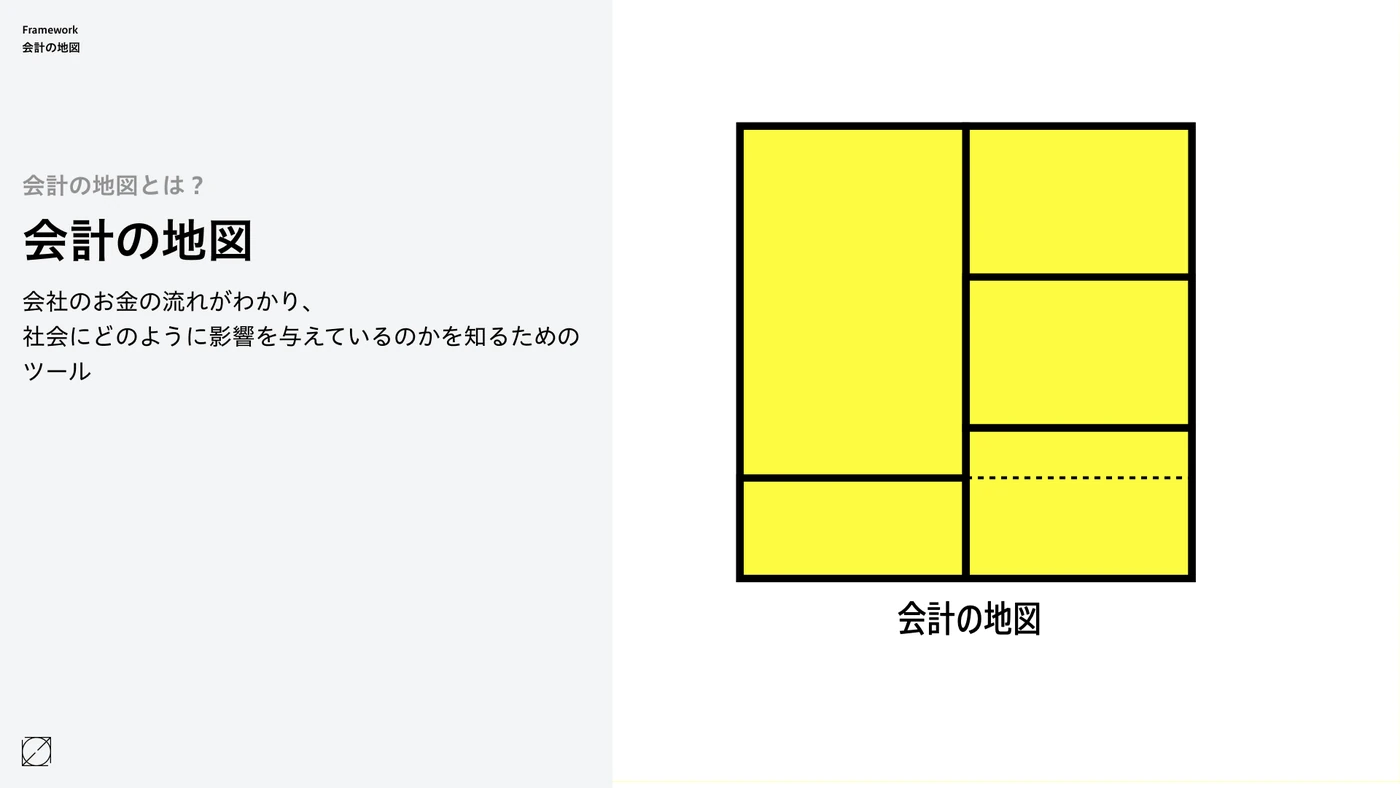
The Accounting Map conveys 15 accounting terms (revenue, expenses, profit, P/L, assets, liabilities, net assets, B/S, cash, cash flow, the three financial statements, market capitalization, goodwill, PBR, and ROE) in a single diagram. With the Accounting Map, you can understand the flow of money in a company and how it affects society. You can also visualize a company's cash flows and, by comparing it with competitors, make its strengths and weaknesses visible.
Use the Accounting Map as an app
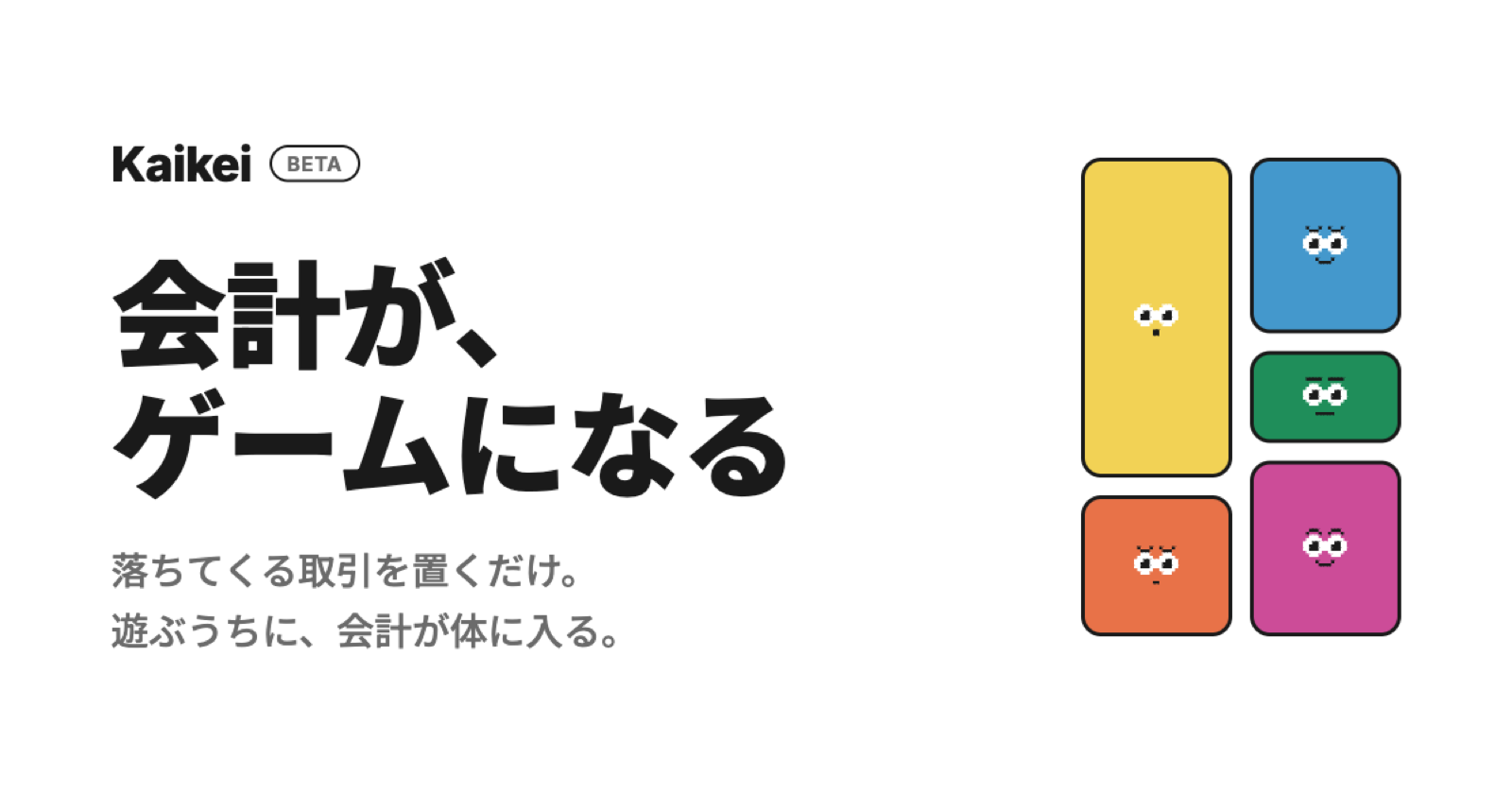
Kaikei — Accounting, as a game
Kaikei turns the Accounting Map into a game you can play. Just place the transactions that fall from the top, and the “accounting map”—the balance sheet and income statement combined into one picture—grows on screen. Not memorization: as you play, the flow of money settles into your body.
How the Accounting Map works
The Accounting Map book
The Accounting Map: Understand the Entire “Flow of Money” with Just One Diagram
This is an introductory accounting book that organizes accounting terms simply with one shared diagram. Two things tend to trip up people who want to learn accounting: how hard the terms are to understand, and how hard the relationships between those terms are to grasp. The “Accounting Map” solves that difficulty. Using a single diagram, it visualizes and explains the meaning of the terms and their relationships. And by following the Accounting Map, you can see how your work connects to your company and to society.
How the Accounting Map Was Born
Just hearing the word “accounting,” many people feel “this seems difficult.” I was one of them. I thought it had nothing to do with me. At the risk of being misunderstood, I think most people today are doing work that either “raises revenue” or “cuts costs.” How about you? Of course, neither of those is wrong—they couldn't be. But don't you sometimes feel a sense of discomfort about work that consists entirely of chasing the numbers in front of you, raising revenue and cutting costs? Don't you sometimes want to truly feel what the work in front of you is ultimately for, and what it connects to? I did. In other words, it was something like a sense of connection to society, of contribution to society, of self-efficacy—the feeling that through my work I am connected to society and having an effect on it. How is my work actually useful to society? I wanted to know. And yet, something as vague as a “sense of contribution” is invisible. So we measure it through the flow of money. The flow of money is visible: how much money is used for what, and how it circulates, can be expressed in numbers. Not only through work, but simply by living—even just by buying products—everyone is involved in society's economic activity. The very act of living means being involved in the flow of money across society as a whole. But the “arrow” that shows how the work in front of you connects to society has become a black box. The connection between your work and society is, above all, hard to see. To begin with, it is difficult to see the flow of money across all of society at once. So, by looking at the flow of money of the “company”—one of society's main components—you can learn how you contribute to society. The tool for that is “accounting,” because accounting is a common language. Precisely because the rules for tracking and managing the flow of money are decided worldwide, everyone can work with peace of mind. Just as it is never too early to learn English, if you know accounting you can converse with people of any generation and any position. Accounting connects “me” and “society.” Because accounting describes the flow of money, knowing how money flows through the world leads to knowing society. I hope the Accounting Map spreads as a way for people who have never engaged with accounting to begin to know society.
Contact
If you have any questions or would like to discuss a project, please feel free to get in touch. Click the “Contact us” button below to open the inquiry form.