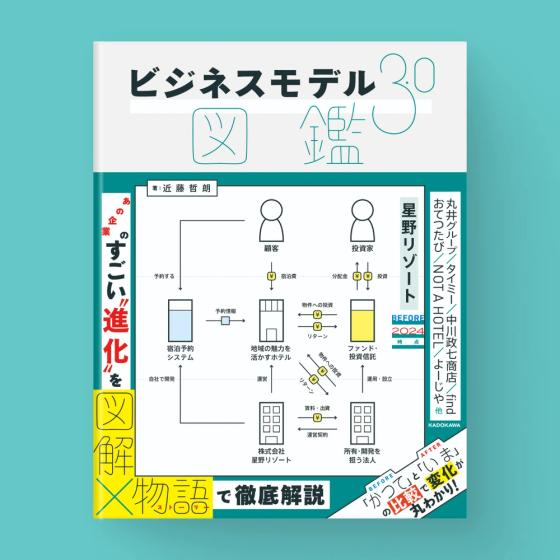
Our CEO Tetsuro Kondo appeared twice, on February 25 and March 25, 2026, on the live talk series of "Nagai Keiei Juku."
Nagai Keiei Juku (in Japanese) is a subscription-based management training service run by KADOKAWA Corporation. At the request of KADOKAWA, the publisher of "Business Model 3.0 Visual Guide," he appeared on its online broadcast two months in a row.
The two themes
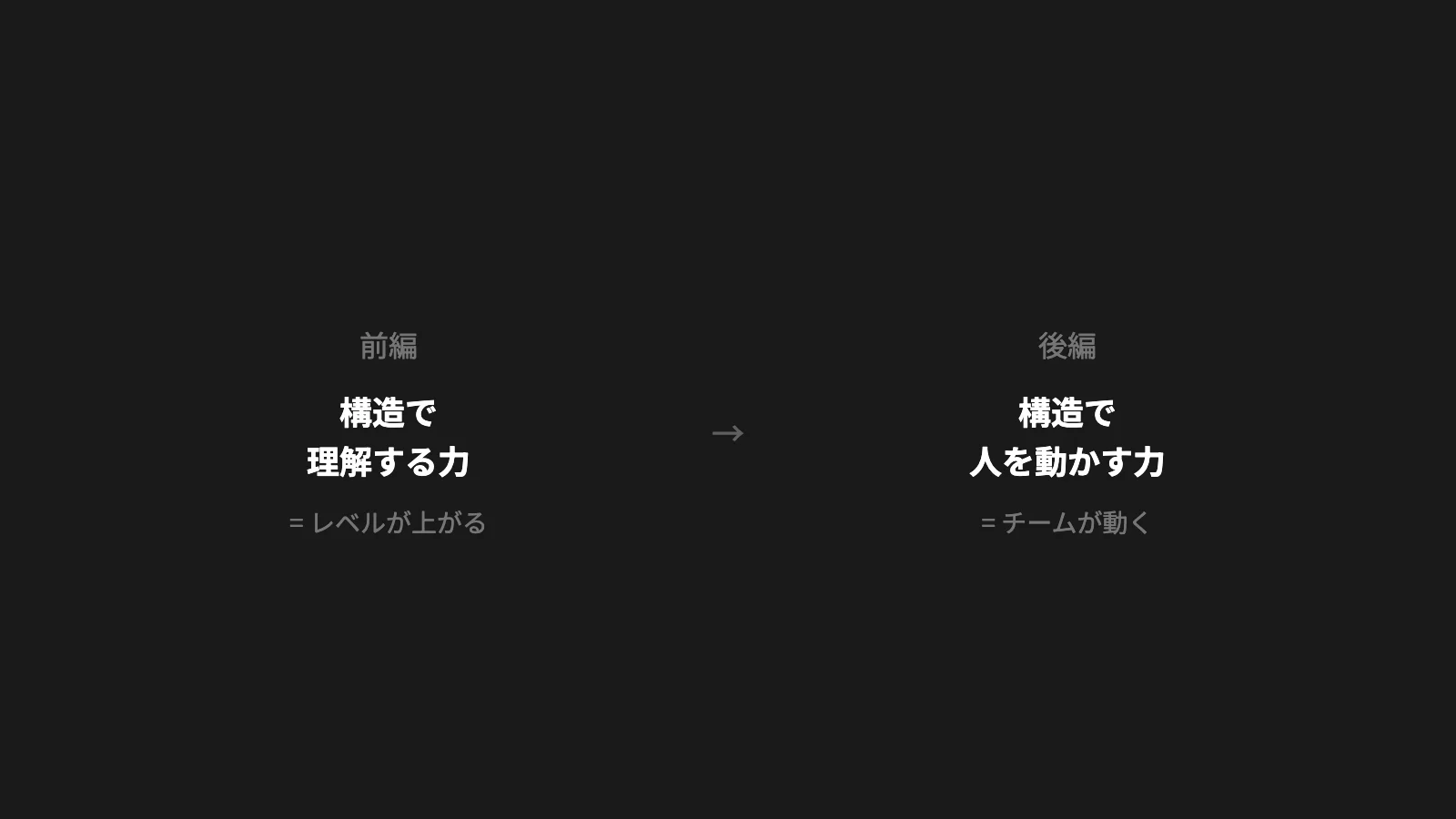
The overall title was "Business-model work skills that take you up one level," split into a first and a second part. In both, he spoke while showing slides he had prepared.
Part 1 (February 25, 2026): "Seeing through to the essence of a business: how to train diagram thinking"
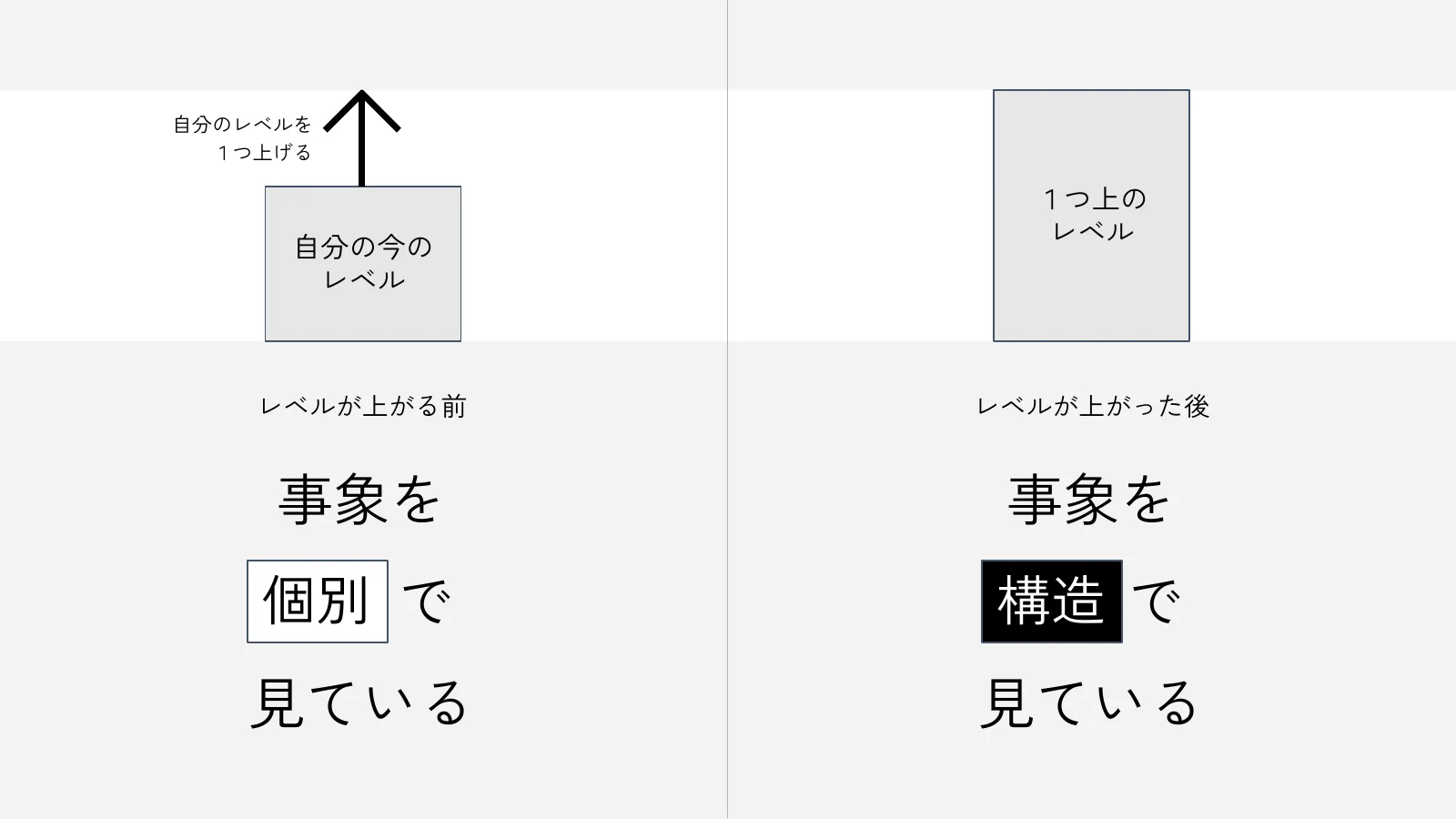
The session began with a question: what does it mean to go up one level? The answer in Part 1 was that it is not about gaining knowledge or years of experience, but about no longer being thrown around by individual events and being able to understand them through structure. It means being able to look at work that is not going well and see that "this is a problem with the revenue structure" or "this is a problem with how the incentives are designed."
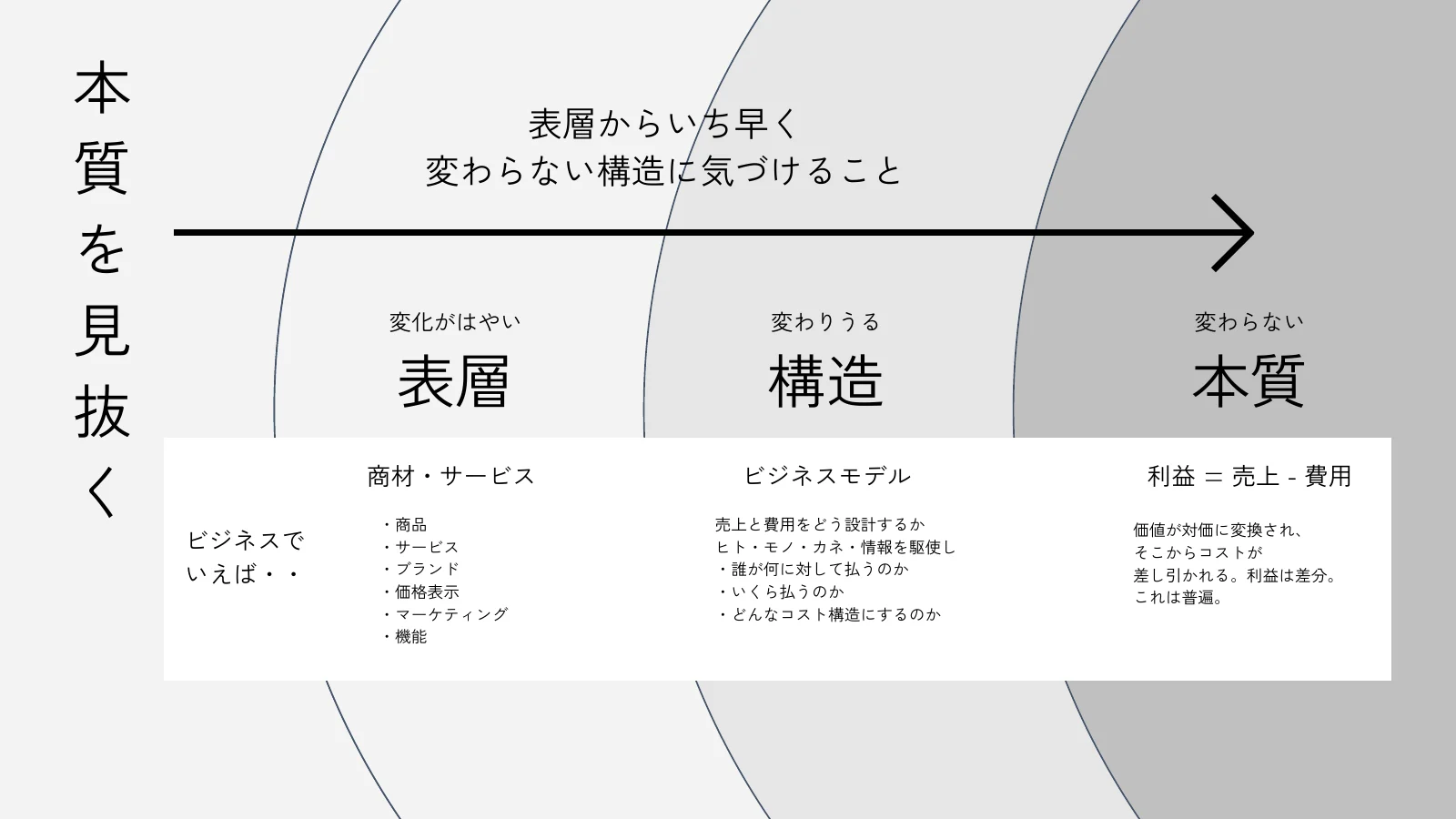
Next, he defined the essence of a business as "the structure that does not change." The surface, such as products and prices, changes quickly, and the business model, meaning how revenue and costs are designed, can change. Beneath them, "profit = revenue - costs" does not change.
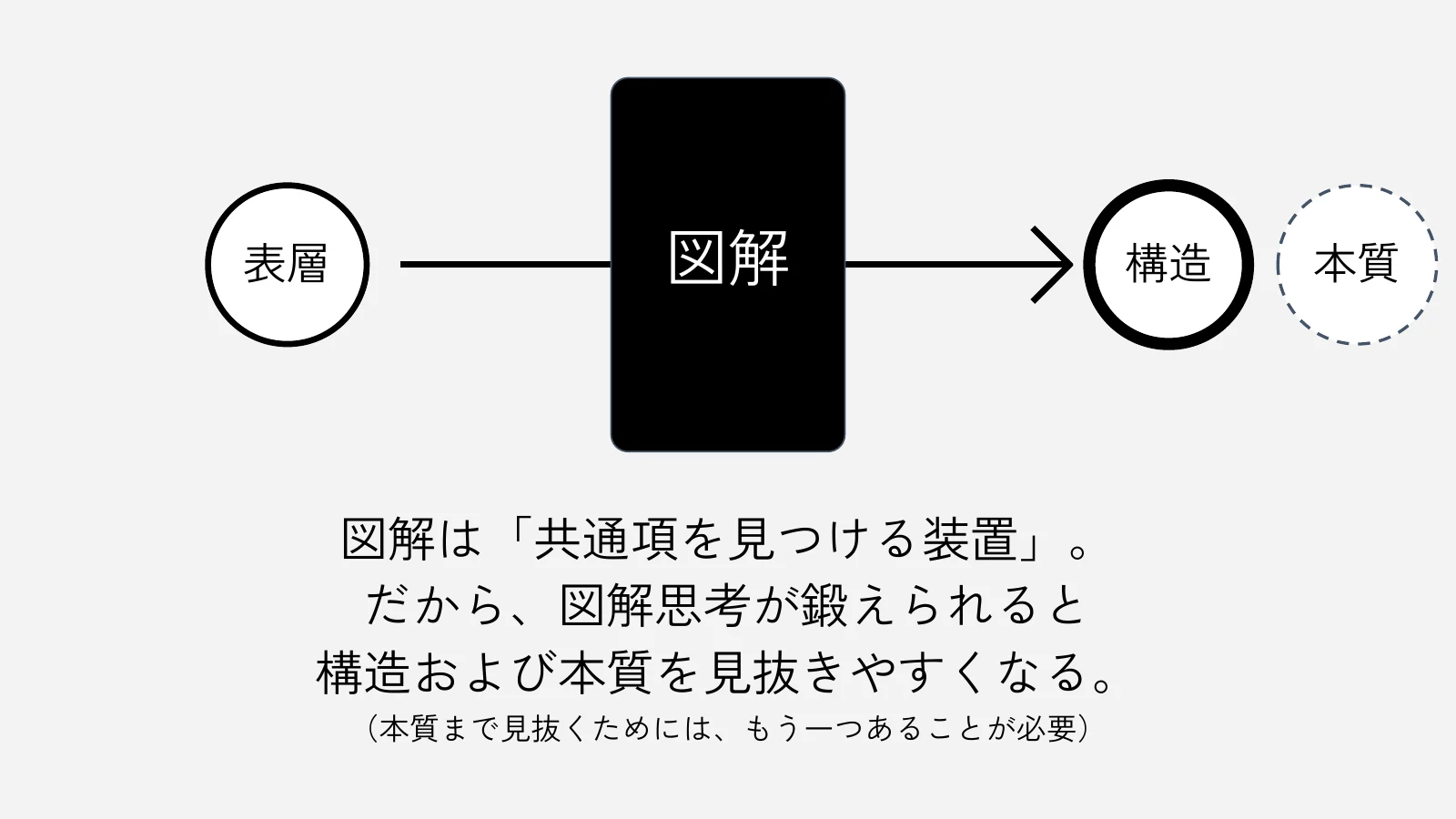
To see through to the essence, you need to find what cases that look unrelated have in common. He described diagramming, which breaks things into elements and sorts out their relationships, as a tool for finding that common ground.
He closed by noting that gathering information and giving it structure is now something generative AI is good at, and left a question that led into Part 2: what role remains for people?
Part 2 (March 25, 2026): "Building a project team where people quickly make the work their own"
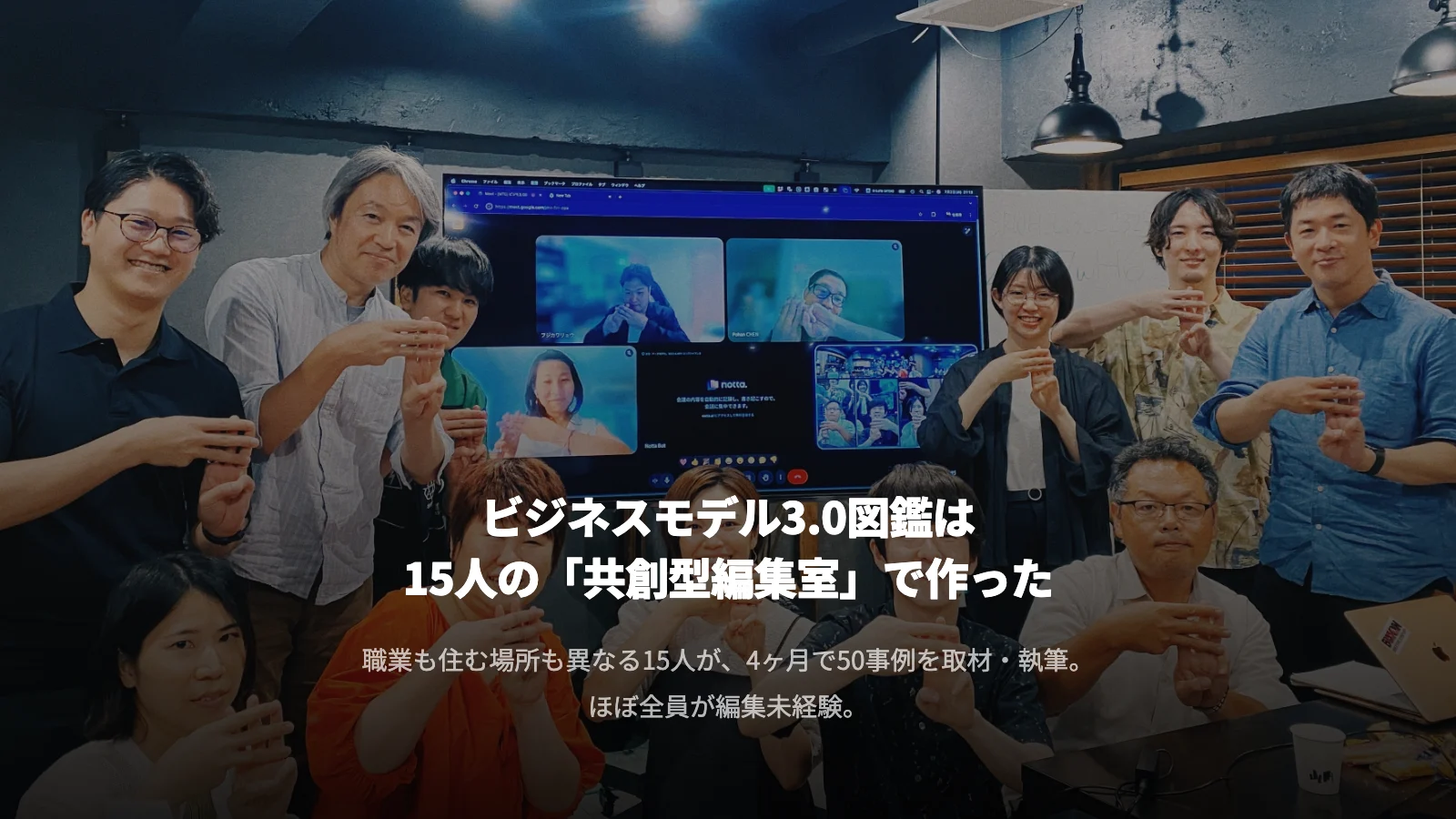
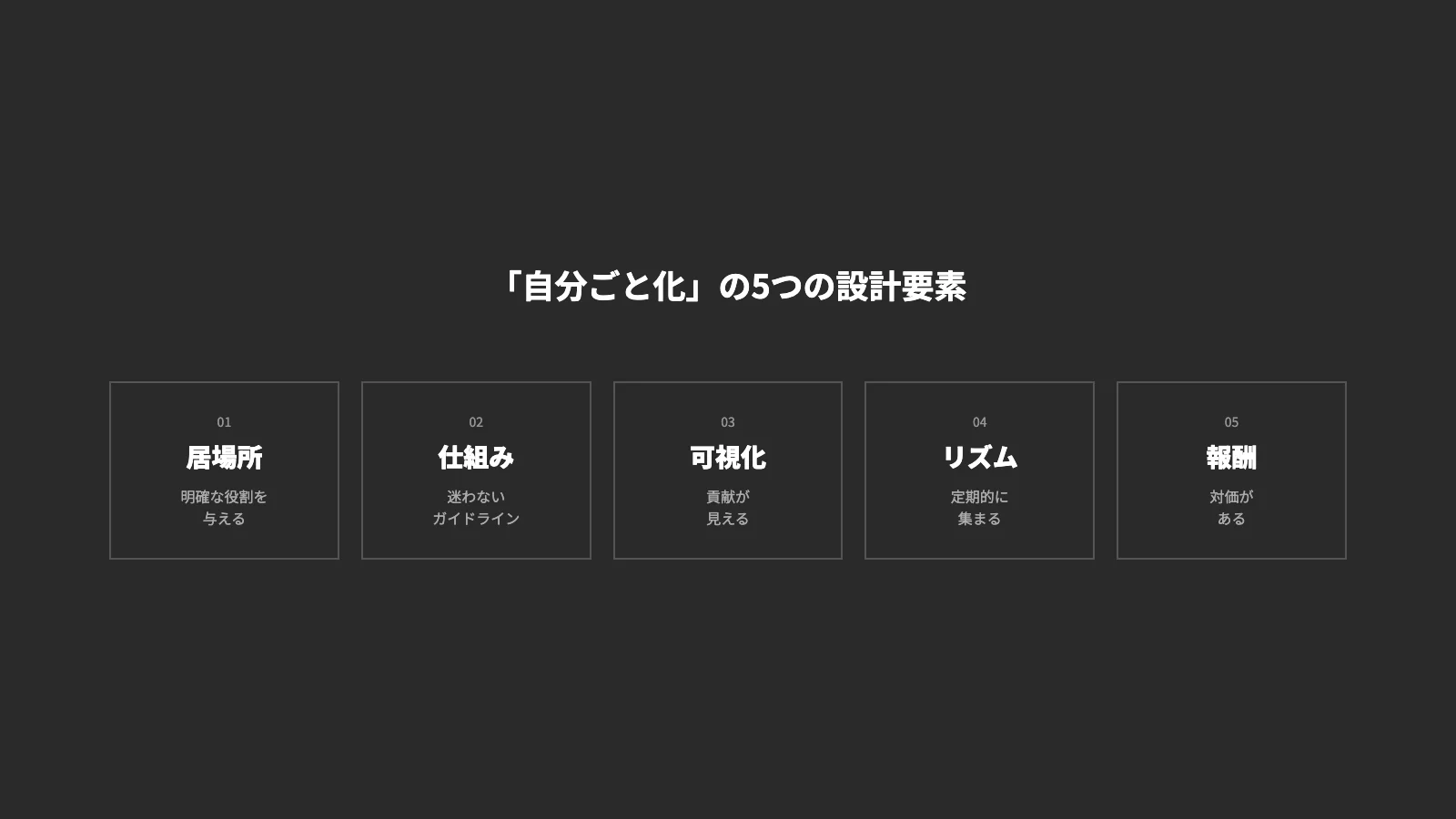
"Business Model 3.0 Visual Guide" was made by an editorial team of 15 people with different jobs living in different places, who interviewed and wrote up 50 cases in four months. Most of them had no editing experience. In Part 2, he answered the question from Part 1 with "drawing people in and making the work their own," and then explained why the members of this team acted on their own initiative, in five elements.
- A place: one person is responsible for one case to the end, and each member's role is made clear
- A system: what makes a diagram good or bad, and how to run an interview, are put into words and gathered into guidelines
- Visibility: the progress and the person in charge of every case are visible to the members and to the companies interviewed
- Rhythm: the team meets at an editorial meeting once every two weeks
- Reward: the work is not volunteer work, and half of the royalties are shared among the editorial team
He closed by saying that the same five elements are needed when handing work to AI agents. Part 1 was about the ability to understand through structure, and Part 2 about the ability to move people through structure.
Appearance details
- Dates: Wednesday, February 25 and Wednesday, March 25, 2026, both starting at 19:20
- Format: Online broadcast
- Organizer: KADOKAWA Corporation (Nagai Keiei Juku)
- Guest: Tetsuro Kondo, CEO, ZUKAI Inc.