Policy Model
OverviewHow it worksBookBackground
What is the Policy Model?
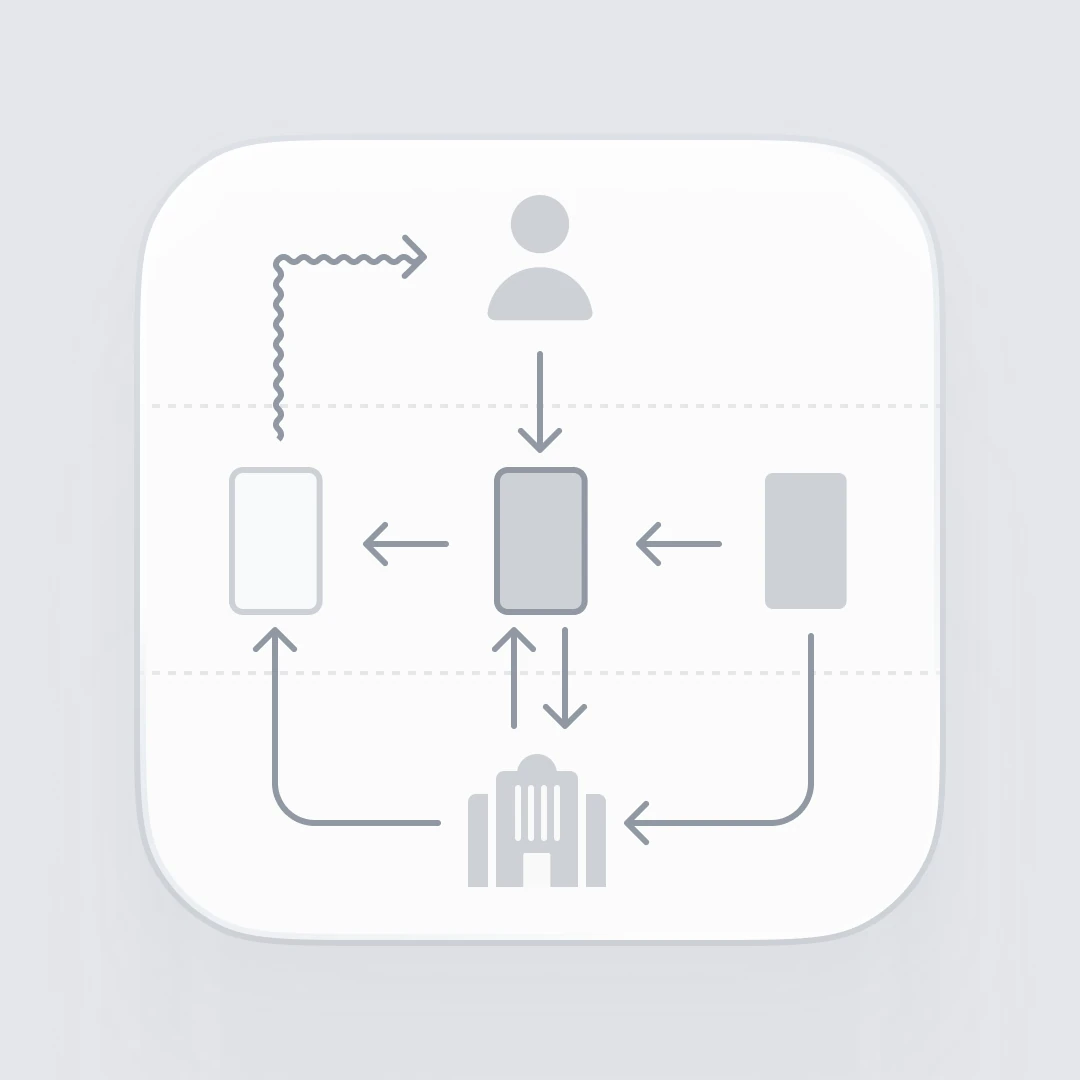
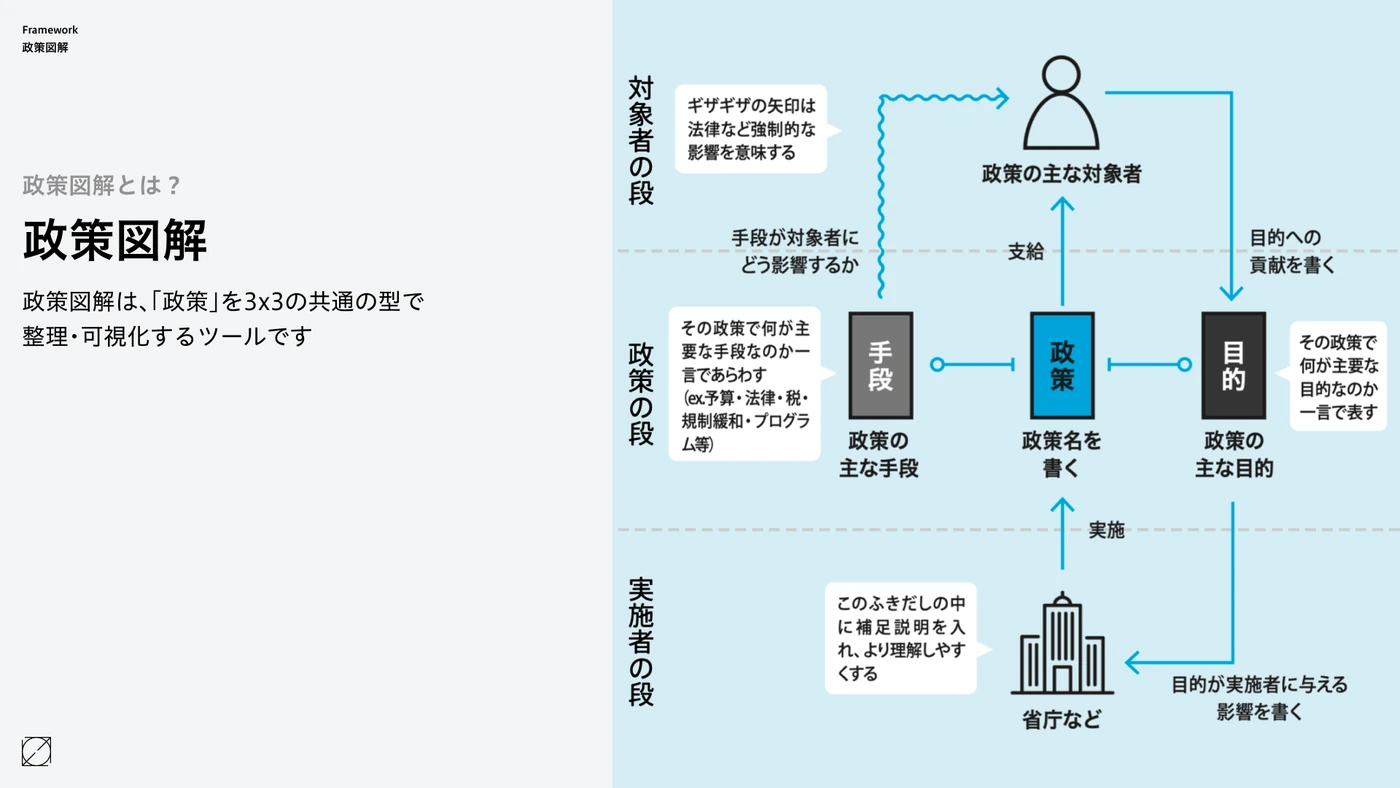
The Policy Model is a tool that organizes and visualizes various systems, laws, and subsidies related to policy using a 3×3 grid of nine cells. You can grasp the outline of a policy: “for whom,” “by whom,” “for what purpose,” and “by what means” it is carried out. Using the Policy Model, people in local governments or organizations trying to devise a particular policy or system can put into words the overall picture of the stakeholders, goals, and means involved, and illustrate it in an easy-to-understand way.
How the Policy Model works
The Policy Model book
Policy Model
This book makes visible the policies that support our economy and society through a method called the “Policy Model.” From familiar examples like NISA and the hometown-tax (furusato nōzei) program to international cases like the Paris Agreement and the TPP, it introduces 50 policies in a shared format. Policies set the very rules of how our economy and society work. Knowing policies—and understanding mechanisms through policies—is sure to be useful as part of a businessperson's general knowledge.
How the Policy Model Was Born
The Policy Model took shape over four years starting in 2019, as we explored how to express policy in an easy-to-understand way—interviewing volunteer bureaucrats and holding workshops many times, including with ministry staff, to diagram policies. In 2023, we used that format to publish a book called “Policy Model” that illustrated 50 policies, and we received responses from people of various generations. We hope the Policy Model becomes a chance for people for whom policy was not familiar to get to know it, and—through policy—to take action toward the society they want. We would be glad if you use it to learn about policy, express it, and discuss or act on it together with others.
Contact
If you have any questions or would like to discuss a project, please feel free to get in touch. Click the “Contact us” button below to open the inquiry form.