We held a workshop using the Strategy Map at a major electronics manufacturer. After a lecture, participants took a real business as the subject, chose strategies from the position of its management, and explained their reasons with business strategy frameworks.
What we made
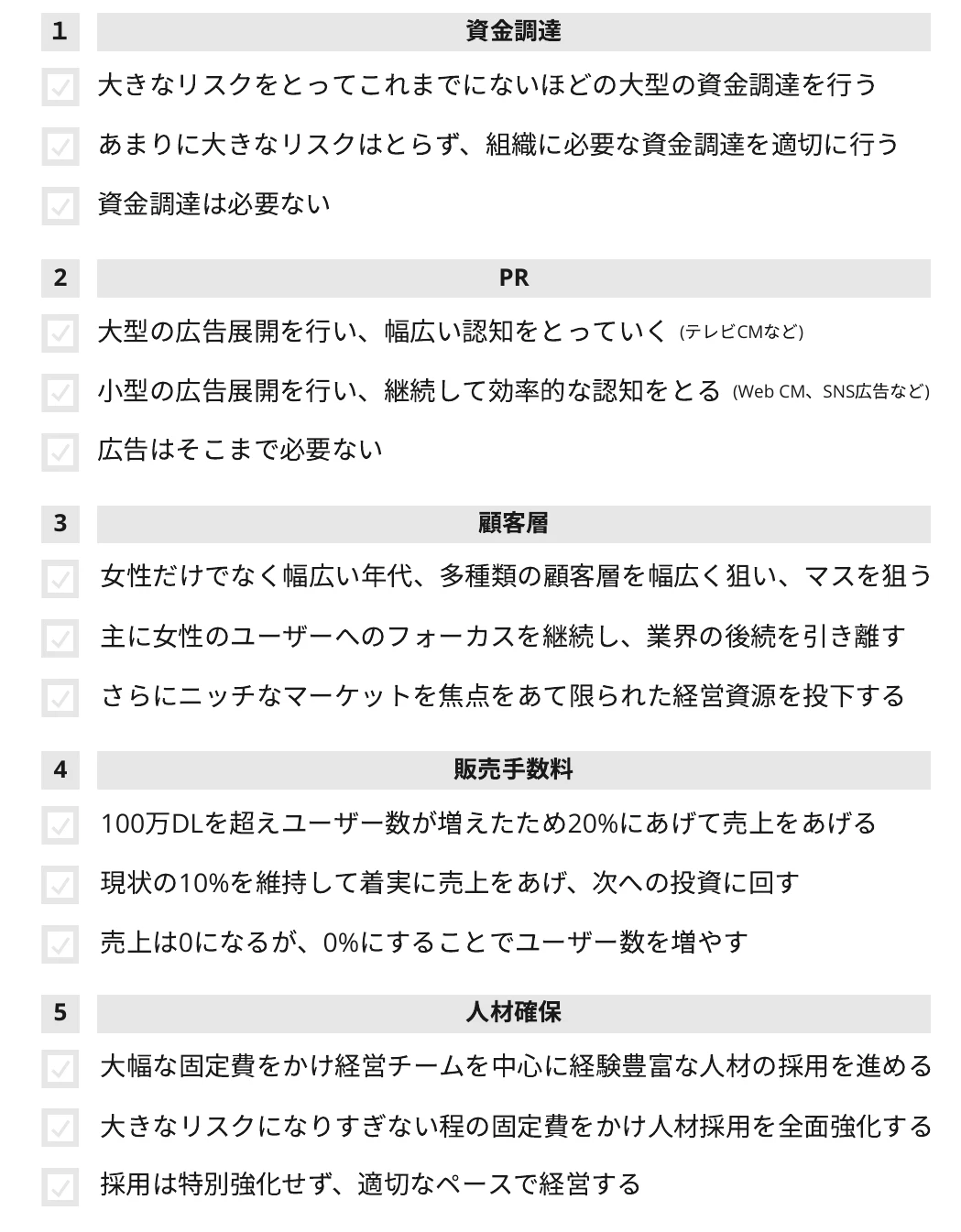
- Decision sheet: a sheet listing three options for each of five areas: fundraising, PR, customer segment, sales commission, and hiring. Each group discusses and picks one per area
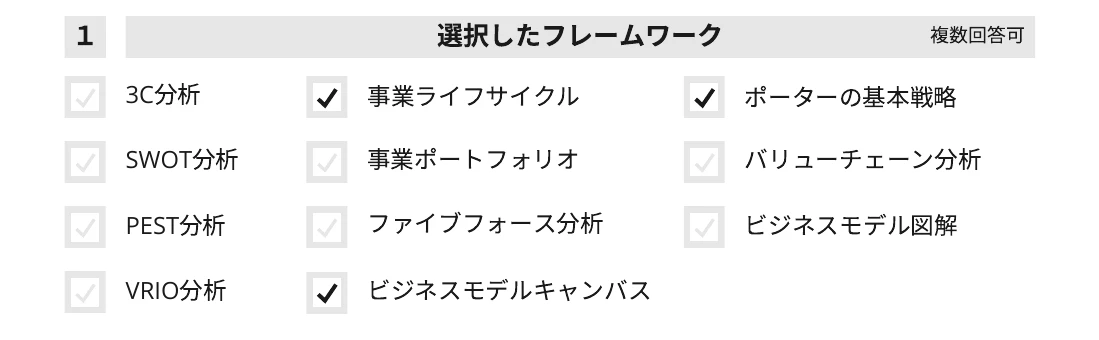
- Reasoning sheet: a sheet for explaining the reason behind the chosen strategy with frameworks. Participants pick from 11 frameworks, including 3C analysis, the business life cycle, Porter's generic strategies, and the Business Model Canvas, and write in the order "question → analysis → hypothesis → conclusion"
- Lecture slides: slides explaining the thinking behind the Strategy Map
How it ran
The subject is a flea-market app company. Participants stand at the point when a competitor has entered a market the company was in first, and each group discusses and chooses what strategy they would take as its management.
Choosing is not the end. Participants explain why they chose it, using frameworks. For example, they set the question "Which stage of growth is the business in now?", analyze it with the business life cycle, form a hypothesis, and write the conclusion "so this is how we choose to raise funds." It is practice in putting a strategy chosen by intuition into words by connecting it to the frameworks on the Strategy Map.
The day ran in this order.
- Lecture on the Strategy Map (40 minutes)
- Strategy Map exercise (70 minutes)
- Sharing with the whole group (45 minutes)
- Discussion (90 minutes): how to extend the Strategy Map into the participants' own work
The following year, at another company, we developed this exercise into a game that includes fundraising and risk, in another Strategy Map workshop.
Overview
- When: February 2024
- Format: in-person workshop
- ZUKAI Inc.'s role: planning the workshop, creating the worksheets and lecture slides, teaching and facilitating on the day
- Deliverables: a two-sheet worksheet set, lecture slides
- Published at: the workshop materials are not public