On September 21, 2021, we released Bizgram, a database that presents business models as diagrams.
What it does
Business models are shown in a list. Choosing one opens its diagram and a written explanation. It is also built to be read on a smartphone.
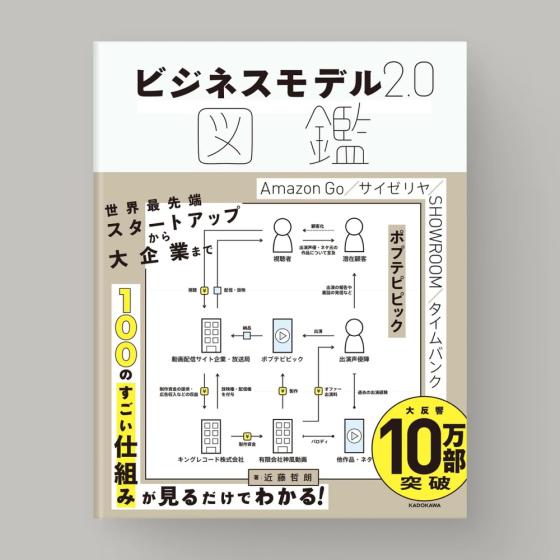
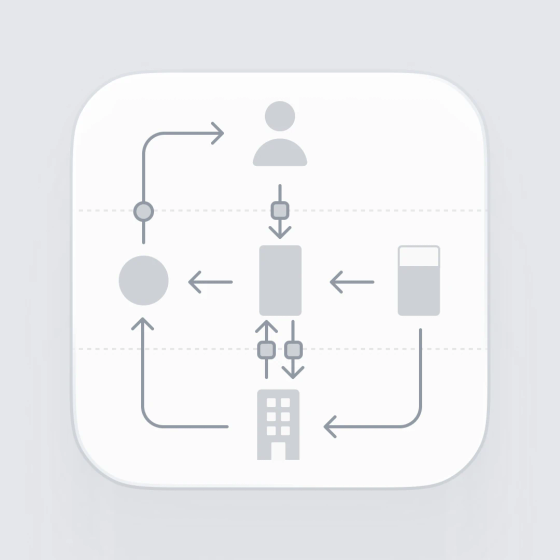
Most of the entries are cases from Business Model 2.0 Visual Guide. They are drawn as business model diagrams: key resources and stakeholders are placed in a 3×3 grid of nine cells to show who is involved, and how, in making the business work. Because the format is the same, businesses can be compared side by side.
Why we built it
Three years had passed since Business Model 2.0 Visual Guide was published in September 2018. In that time COVID-19 spread, and many businesses were forced to change their business models.
Meanwhile, information about business models rarely becomes public and is not gathered in one place. Change is being demanded, yet the information to learn from is hard to reach.
The first idea, and what we released
The first idea was a tool in which anyone could edit business models in the same format, show them to each other and keep a history of changes: a business model version of GitHub, the service used in software development.
But coming up with a business model on screen from scratch is difficult, and we came to think that it skipped a step. We divided the work around business models into three stages, "learn," "make" and "test," and this release gives form to "learn" first.
At the time of release it was a prototype, and how it would earn revenue had not been decided. We ran a survey alongside it to hear what users wanted.
The background is written up on note.
Since then
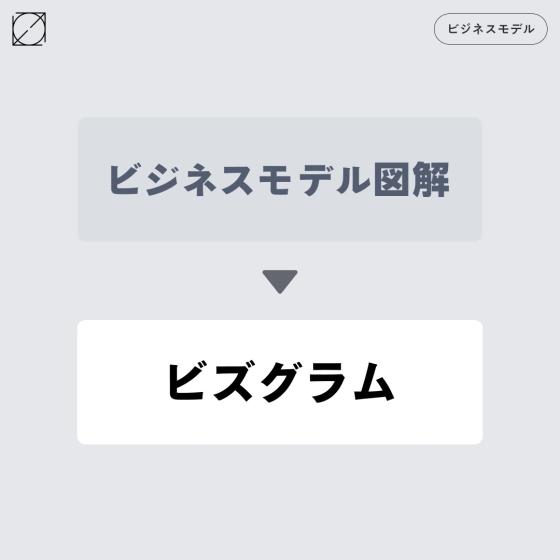
Bizgram was renewed in January 2024, and a plan for companies began in October 2024. In March 2025, the official name of the business model diagram itself became "Bizgram".