Accounting game training
Read financial statements as one diagram, and talk about how money flows through a company in numbers.

What you do
Found a company and run it for two years
- Length
- 2 hours to 1 day
- For
- New hires through to managers and executives
- Format
- In person or online (everyone works hands-on, even with more than 100 people)
52 of 53Satisfied or very satisfied
When it helps
- Income statements and balance sheets are hard to read
- When numbers come up, only a few people can join in
- It is unclear what in your own work moves the company's numbers
Framework it builds on: Accounting Map →
The day
This is how the package training runs. Made-to-order training is rearranged to fit your requests.
Each sticky note is 100 million yen. Teams run a company while building the Accounting Map by hand. Choose how to win orders, and events such as "a customer went bankrupt!" move the map. At the end, teams compare their results, then read real financial statements.
- 01LearnRead financial statements as one diagram with the Accounting Map
- 02TryA quiz guessing real companies' results, with each sticky note worth ¥100 million
- 03RunFound a company as a team and choose how to take on work for two yearsHighlight
- 04Event"A customer went bankrupt!" How the map moves depends on the path you tookHighlight
- 05ReadRead real statements, or your company's published documents, as a map
On the day
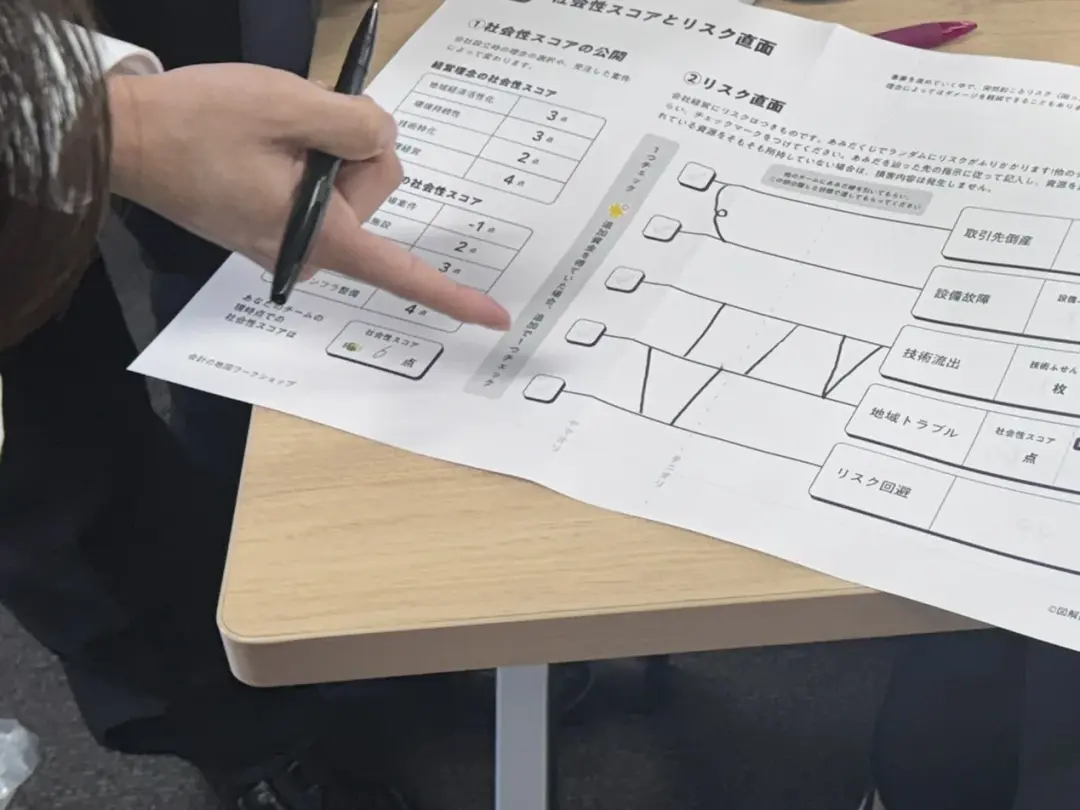
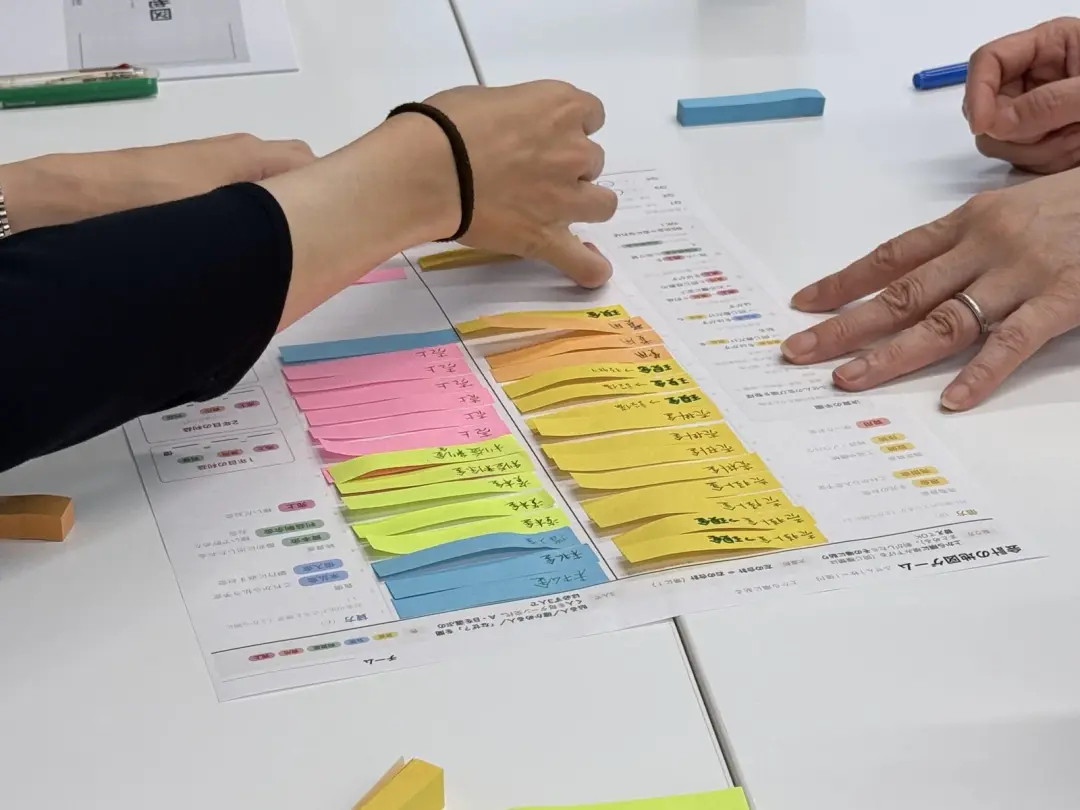
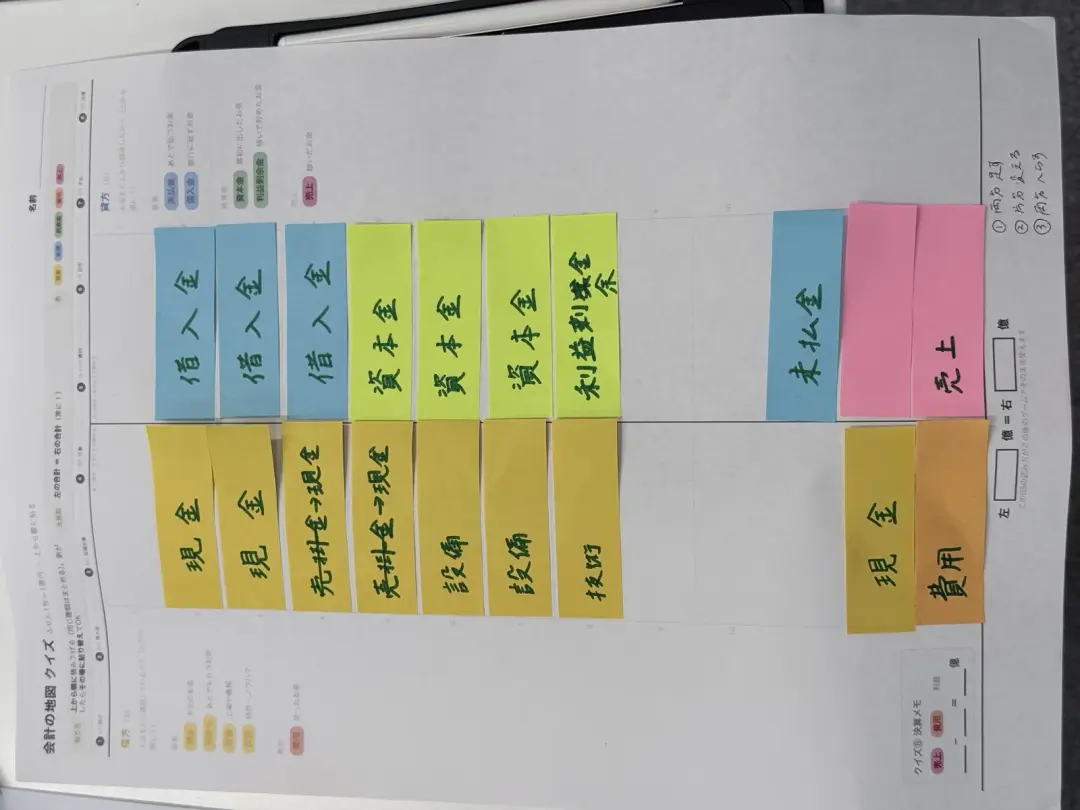
A moment in the game
The first choice in the game. Teams discuss, choose, and move their sticky notes to match.
One company offers a large annual contract. Several others could give you smaller jobs. Which do you take?
AOne large contract
Focus on one customer. Expect ¥300 million in sales, with ¥100 million in materials and labour.
- Receivables +3
- Sales +3
- Expenses +1
- Payables +1
BSpread across customers
Take smaller jobs from several customers. Sales of ¥200 million, with expenses of ¥100 million.
- Receivables +2
- Sales +2
- Expenses +1
- Payables +1
Taking work creates sales. The money does not arrive at once, so it goes on receivables, and costs not yet paid go on payables.
What participants said
From post-training surveys, translated from Japanese.
I saw accounting as a tool for specialists, but now I think every working person should understand it, as a way to see things from higher up.
I came to see accounting as a kind of shared language used everywhere, like infrastructure.
New-hire training
I learned that cash is a company's stamina, and how you use that stamina matters. I also learned that deciding what to invest in, such as technology or advertising, matters in running a company.
New-hire training
I am studying bookkeeping now but did not understand financial results. Working with the Accounting Map, I clearly understood how profit arises and how a company's equity grows.
New-hire training
Accounting seemed hard with its numbers and terms, but its structure was simpler than I thought. Real accounting is often complex, but grasping the overall structure was very good.
New-hire training
It was explained very clearly, so I no longer feel that accounting is not for me.
New-hire training
Learning accounting with exercises, not just lectures, made it fun. Discussing how my decisions differed from my teammates' was interesting too.
New-hire training
I realised that extremes, only defending or only attacking, are not the best way to run a company or think about accounting. Feeling how hard business choices are was a valuable experience.
New-hire training
This workshop showed me how important it is to choose with the future in mind, not just what is in front of you.
New-hire training
I came to understand how to read financial statements and why cash flow matters. In particular, I could feel how daily work affects the accounts, which deepened my knowledge of accounting.
New-hire training
I started with no accounting knowledge and understood little at first, but the sticky notes made it clear and easier to remember.
New-hire training
Predicting invisible risks was hard, and some things came down to luck, which made the system complex and fun.
New-hire training
Seeing accounting concepts as diagrams connected what I already knew and deepened my understanding.
New-hire training
Past training
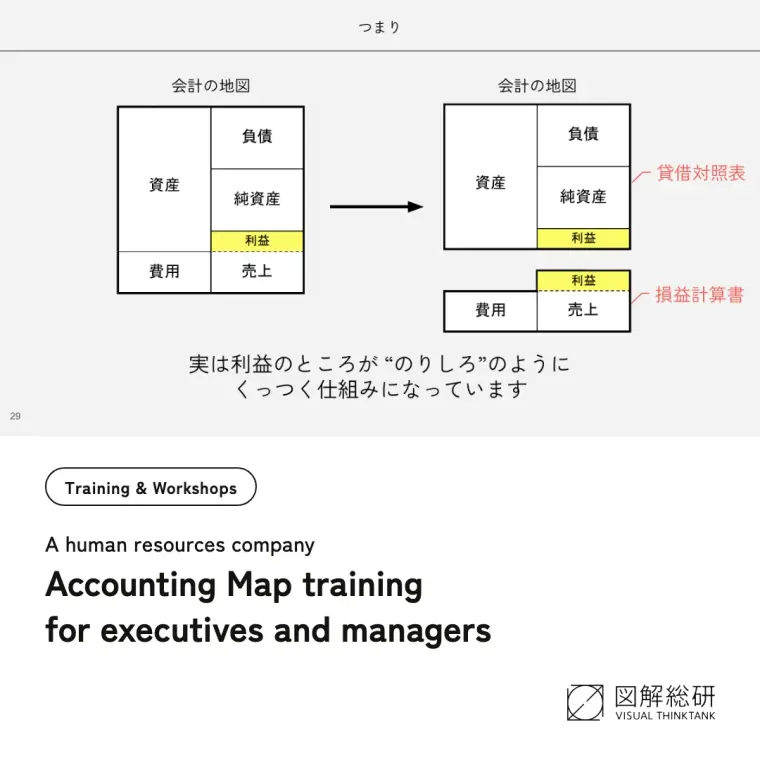
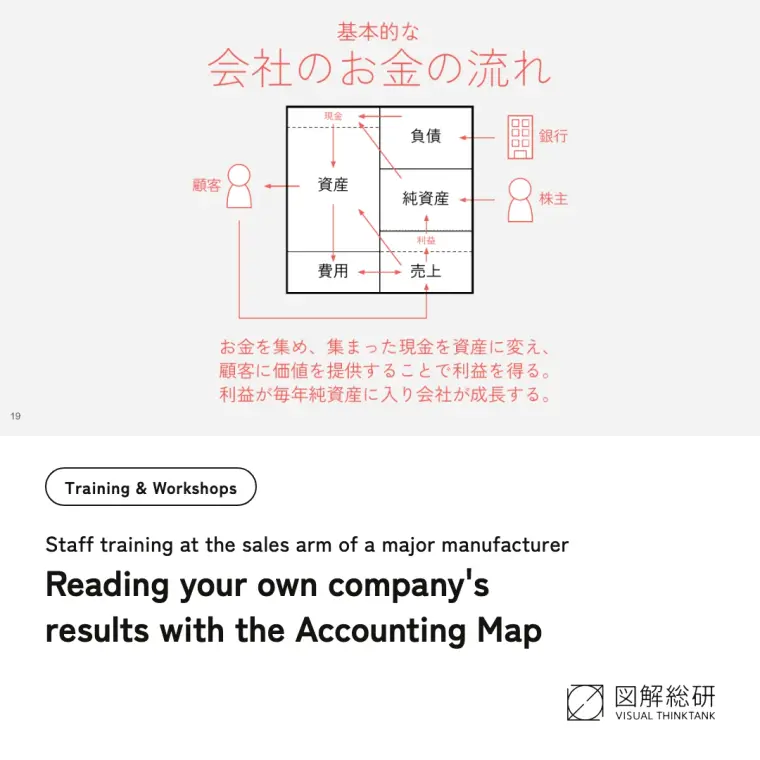
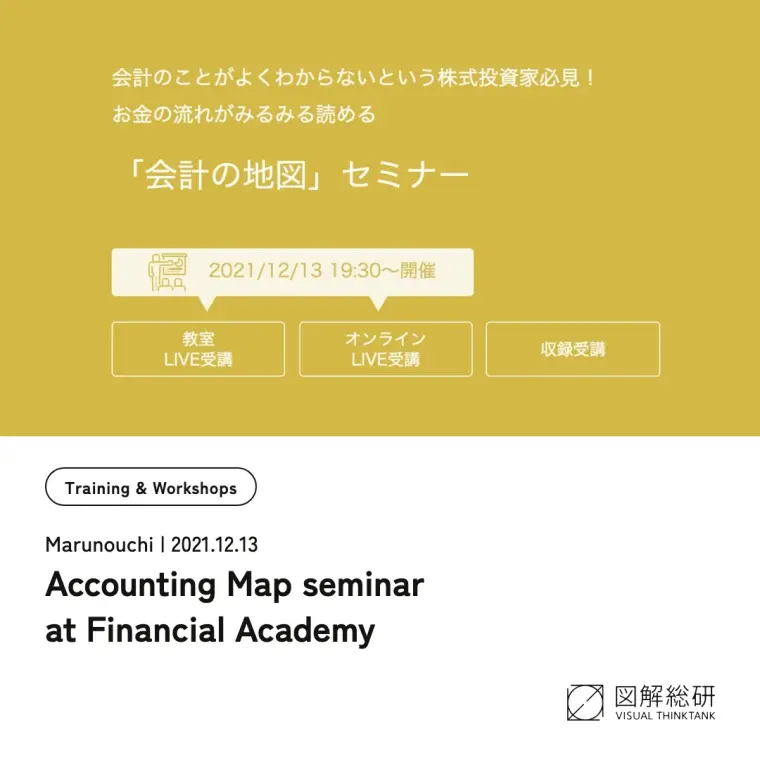
Ask whether it can be shaped for your company.
Talk to us about this trainingWays to ask and price
- Set materials
- Watch the recorded lecture beforehand
- One of our facilitators leads
Package training
- One of our facilitators leads the day
- Everyone watches a recorded lecture beforehand
- The price is kept lower
- Your requests
- We plan the training
- We run it from the plan
Made-to-order training
- We plan the training from your requests
- One of our facilitators or our CEO leads the day
- The price is higher, because the training is planned for you
Either way, we quote based on the length, group size and material.
Contact
You do not need to know which training fits. Tell us what you are stuck on and who will take part. We shape it to your time, group size and material and propose it.
Talk to us